ACE Montessori · Montessori

The Montessori approach.

Child-centered, hands-on, and holistic.

Within the child lies the fate of the future.

— Dr. Maria Montessori

Core philosophy

A personalized education for the whole child.

Montessori is a personalized educational method that recognizes each child learns at their own pace and in their own style. It is a child-centered, holistic approach that addresses every dimension of development: physical, cognitive, social, emotional, and moral.

The classroom
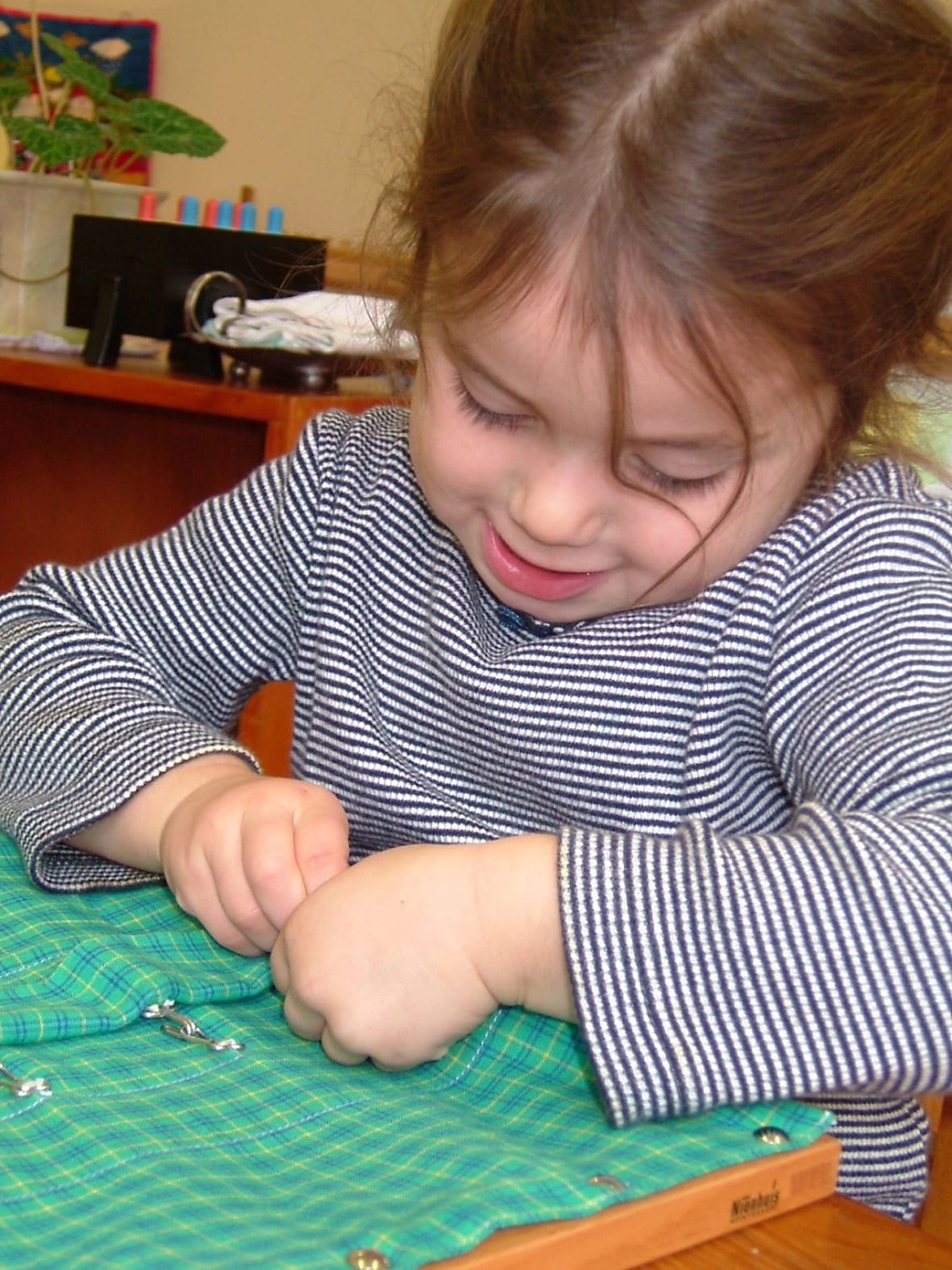
Structural freedom, designed on purpose.

  • Montessori classrooms are intentionally designed with structured freedom, allowing children to move independently and choose activities that align with their interests and developmental readiness. This balance of freedom within clear boundaries nurtures independence, initiative, and confident decision-making.
  • Social development is naturally embedded throughout the day. Mixed-age groupings create a collaborative community where older children model positive behaviours, leadership, and responsibility, while younger children learn through observation and guided interaction. This dynamic fosters respect, empathy, and natural mentorship, reducing negative behaviour and strengthening social cohesion.
  • The learning environment evolves with the child. Carefully prepared, concrete, multi-sensory materials invite active engagement and provide immediate feedback through built-in control of error, encouraging self-correction, concentration, and deeper understanding.
  • Each material is designed for multiple levels of exploration, allowing children at different stages to engage with the same resource in progression, making it meaningful in every stage.
  • Educators continuously observe each child’s progress, interests, and learning patterns, using these insights to guide instruction and ensure that every child is appropriately supported and challenged in their growth.
A Montessori classroom in Australia: children working independently with classical Montessori materials.

Essential elements

Six things every Montessori program needs.

Family partnership

Families are integral to overall child development. We treat school and home as a single system.

Mixed-age grouping

Heterogeneous classrooms let older children lead and younger children stretch, how it happens in families.

Specialized materials

Diverse, hands-on resources foster physical, intellectual, creative, and social independence.

Uninterrupted time blocks

Extended work periods let children pursue problems and ideas deeply, without disruption.

Collaborative atmosphere

Social interaction supports cooperative learning and emotional growth while peace encompasses the classroom.

Trained educators

Every educator is trained to observe, assess, and meet the child where they are. The educator works as a guide, rather than a teacher.

See it in person.

A school visit shows what these ideas look like in practice. Join our waitlist and we’ll set up a tour.

Or call 905 472 9899