Every child learns differently, and every family has its own hopes for education. Montessori offers a distinctive approach, one that gives children room to explore, make choices, build independence, and develop a lasting love of learning, within a thoughtfully prepared environment and with guidance from caring educators.
The question isn’t whether Montessori is better than another approach. It’s whether its philosophy, pace, and learning environment are the right fit for your child and your family.
Here are ten things to consider.
The ten indicators
Montessori families tend to…
-
Motivation source
You believe children thrive on internal motivation: satisfaction from independence and mastering new skills, not from stickers and prizes.
-
Educational goals
You prioritize a thoughtful, well-adjusted adult over grade-advancement metrics. Success in this method takes a consistent pathway, usually incompatible with leaving for traditional kindergarten mid-journey.
-
Openness to alternative methods
You’re willing to explore educational approaches outside the conventional model, matching method to your child’s real learning style.
-
Classroom environment preference
You prefer orderly, bright, peaceful spaces where children work independently at their own pace. Voices stay soft; the room hums rather than buzzes.
-
Definition of success
You value happiness, adjustment, and self-motivation more than elementary-school achievement metrics.
-
Schedule commitment
You can commit to consistent 5-day attendance. Routine is how children settle in; part-time schedules undermine the structure that makes the method work.
-
Learning methods
You embrace hands-on exploration over worksheets and memorization. Children learn more effectively through independent exploration than by reciting facts.
-
Pacing expectations
You accept individual learning timelines. Children progress by readiness, not by age-based benchmarks.
-
Learning structure
You appreciate child-directed activity selection without strict time blocks. Uninterrupted exploration is how depth happens.
-
Independence development
You prioritize self-reliance. The method cultivates confident, enthusiastic, self-directed learners who think independently.
Honest closer
Two things to consider before you decide.
How does your child learn best?
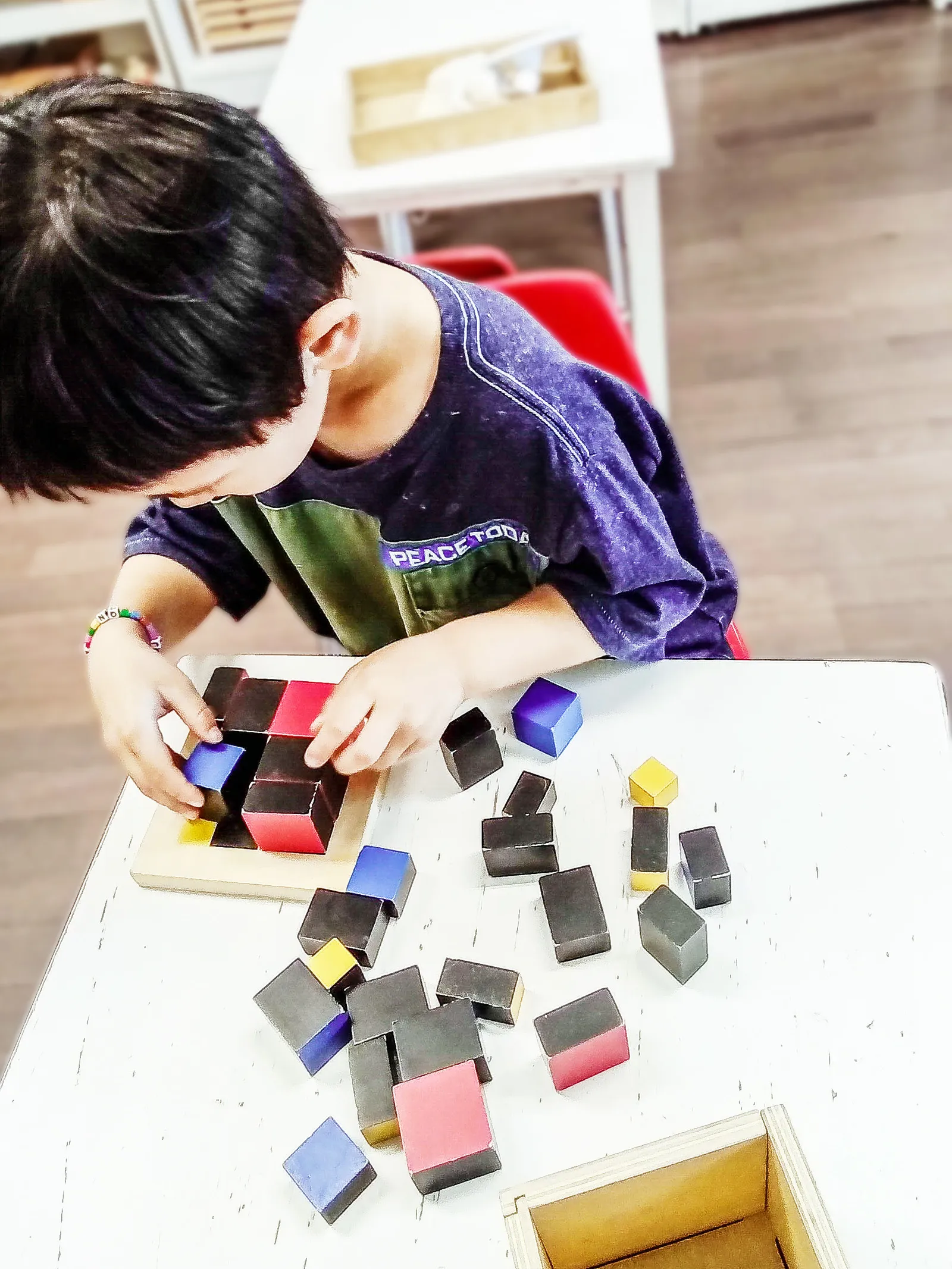
Montessori gives children considerable independence and freedom within a structured environment. Children learn through hands-on experiences, observation, exploration, repetition, and discovery, with educators guiding them according to their individual development. If your child thrives when given the time and space to explore, practise, and figure things out for themselves, Montessori may be a natural fit.
What do you want from your child’s early education?
Montessori places a strong emphasis on independence, concentration, practical skills, and intrinsic motivation. Academic learning is important, but so are the skills children need to become capable, confident, and thoughtful people. Children are encouraged to care for themselves and their environment, solve problems, make thoughtful choices, and develop a genuine love of learning. Are you looking to nurture your child with these qualities?
Come see for yourself.
The best fit test is a school visit. Join our waitlist and we’ll find a time that works for your family.
Or call 905 472 9899